
Expert voices
From waste to opportunities: more value for companies
From waste to opportunities: more value for companies
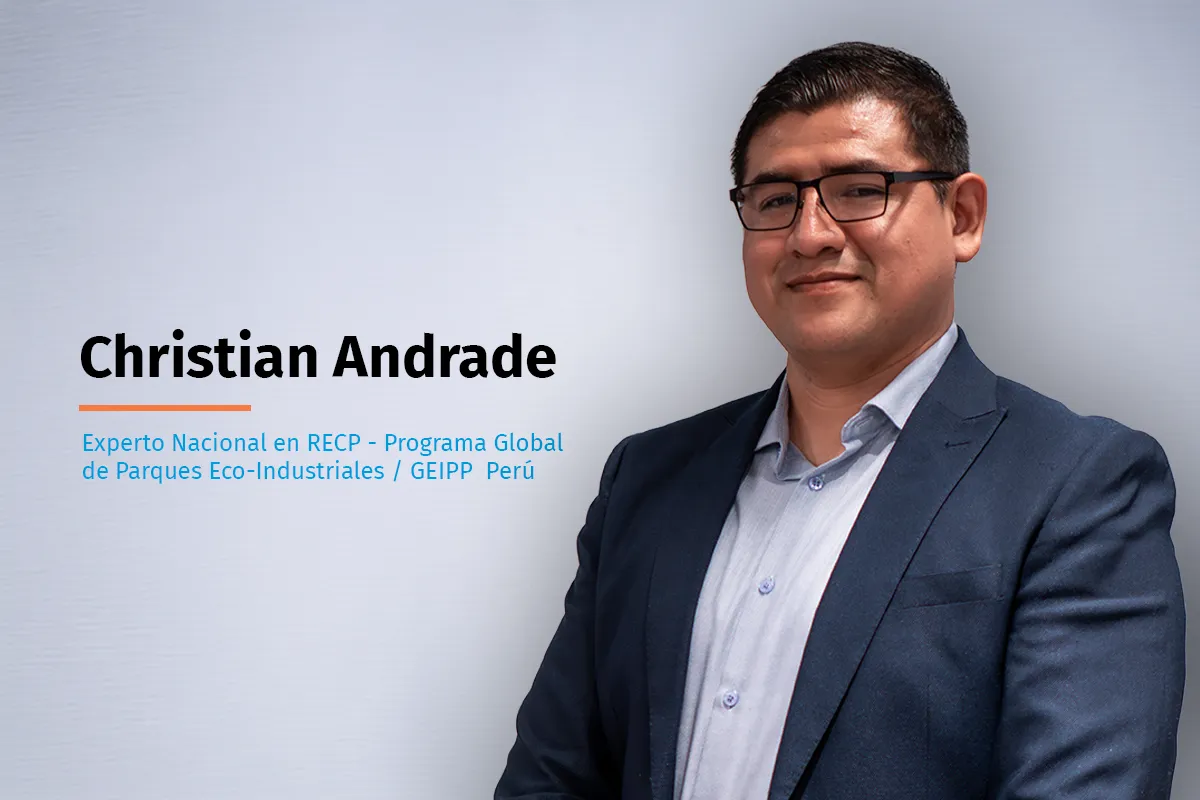
What changes, in practice, when companies stop seeing their waste as a cost and start seeing it as an opportunity? Christian Andrade, National Resource Efficient and Cleaner Production (RECP) Expert at EIP Peru, answers.
In many companies, waste is seen as an unavoidable expense: it has to be stored, transported and disposed of. However, part of those materials still holds value. That is why, in Eco-Industrial Parks, the question is starting to change: it is no longer just about getting rid of waste, but about turning waste into opportunities.
This interview is part of a series in which members of the Global Eco-Industrial Parks Programme share their views on the challenges of a more sustainable industry.
What if waste still holds value?
What if what we call waste still holds value that we can use? In Eco-Industrial Parks, proper segregation, characterization and storage preserve the value of materials and create opportunities to recover, recycle, recirculate or donate them.
In this way, we reduce waste and emissions, recover resources and generate environmental, social and economic benefits.
Turning waste into opportunities starts with changing the question
The change happens when we stop asking how much it costs to manage a waste stream and start asking how much value we can recover from it.
What it means in practice
The three actions Christian mentions are the basis for keeping a material from losing its value:
- Segregate: separate waste where it is generated, so that it is not mixed or contaminated.
- Characterize: know what type of material it is, how much is generated and in what condition, to know how it can be used.
- Store properly: keep the material in conditions that maintain its quality until it is used.
From there, different routes open up: recovering materials, recycling them, recirculating them within the same process or between companies, or donating them so that others can use them.
This approach is part of Resource Efficient and Cleaner Production (RECP), which seeks to prevent at the source rather than treat at the end. As a reference, the EIP Peru 2025 RECP Quick Scan assessment identified 149 opportunities in 12 companies in 2 industrial parks, with the potential to reduce waste by 797.6 tonnes per year.
Christian Andrade · National Resource Efficient and Cleaner Production (RECP) Expert · EIP Peru