
News
Industrial space assessment: training for PNDP
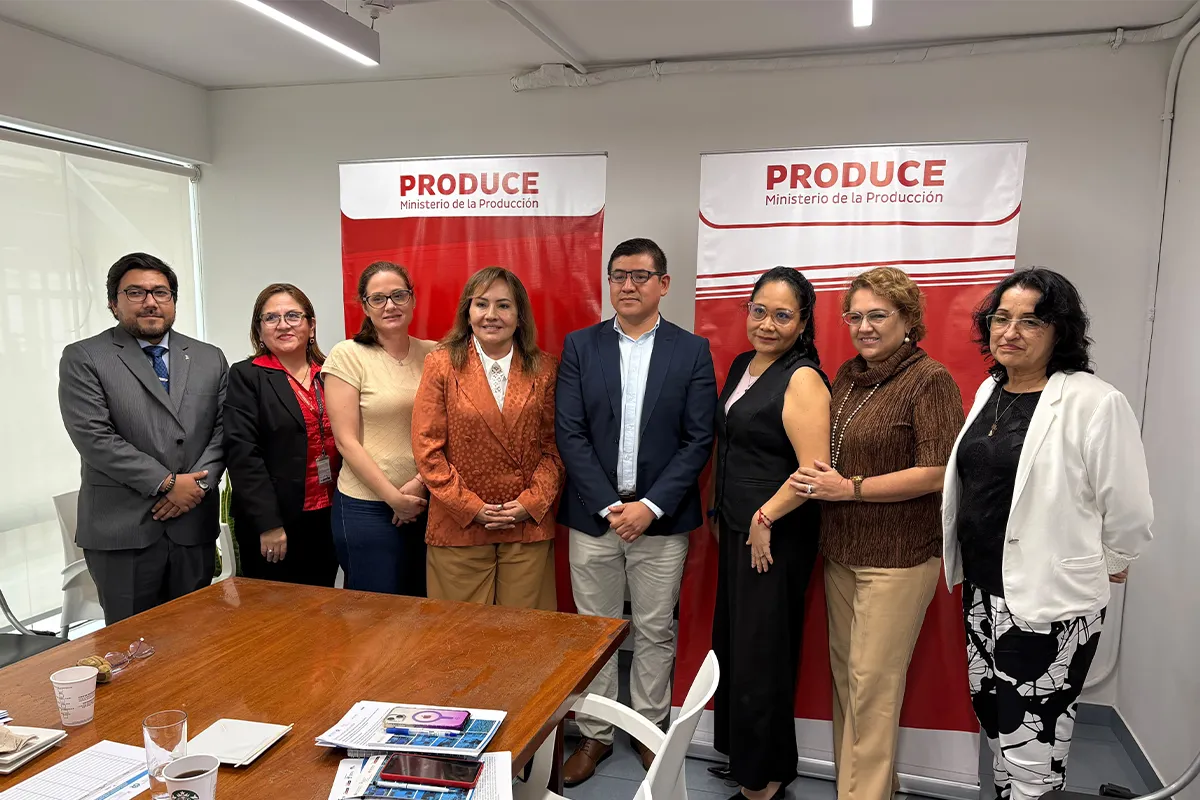
EIP Peru trains PNDP on Eco-Industrial Parks and industrial space assessment
The team of PRODUCE’s National Productive Diversification Programme (PNDP) took part in a training session on the Eco-Industrial Park model, industrial space assessment tools and sustainability by design.
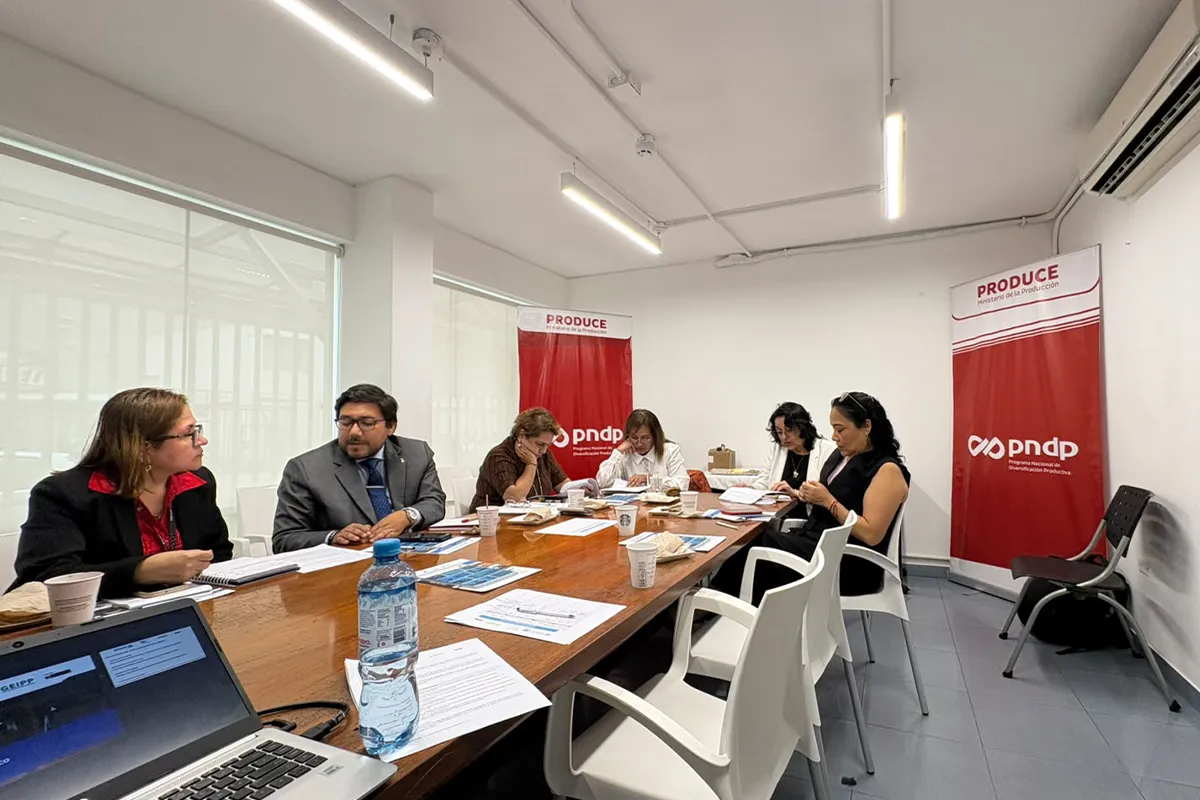
On 27 October, EIP Peru held a training session for PNDP on Eco-Industrial Parks and industrial space assessment. The session was led by Pamella Bocanegra Gervasi, Policy Coordinator at EIP Peru, and took place at PNDP.
The goal was to link the Eco-Industrial Park model to the team’s daily work: reviewing proposals for new spaces, monitoring existing parks and the technical assistance the programme provides.
The Eco-Industrial Park model and its framework in Peru
An Eco-Industrial Park seeks to be both sustainable and competitive. That is why the model integrates four dimensions: park management, environmental performance (water, energy, materials and waste), social performance (working conditions, safety and community relations) and economic performance.
The session also reviewed the regulatory basis that guides park development in the country, from the National Industrial Parks System (SNPI) to NTP 222.105:2025, which sets sustainability requirements for Eco-Industrial Parks.
Tools for industrial space assessment
A central part of the session was devoted to the two tools approved by PRODUCE in 2026 (R. D. E. 00006-2026-PRODUCE), which have different purposes:
- New industrial spaces: a preliminary, non-binding technical assessment of each proposal, which reviews five components and ends with an action plan with responsibilities and deadlines.
- Existing industrial spaces: makes it possible to register and classify each space, build a baseline with 15 indicators and track its evolution over time.
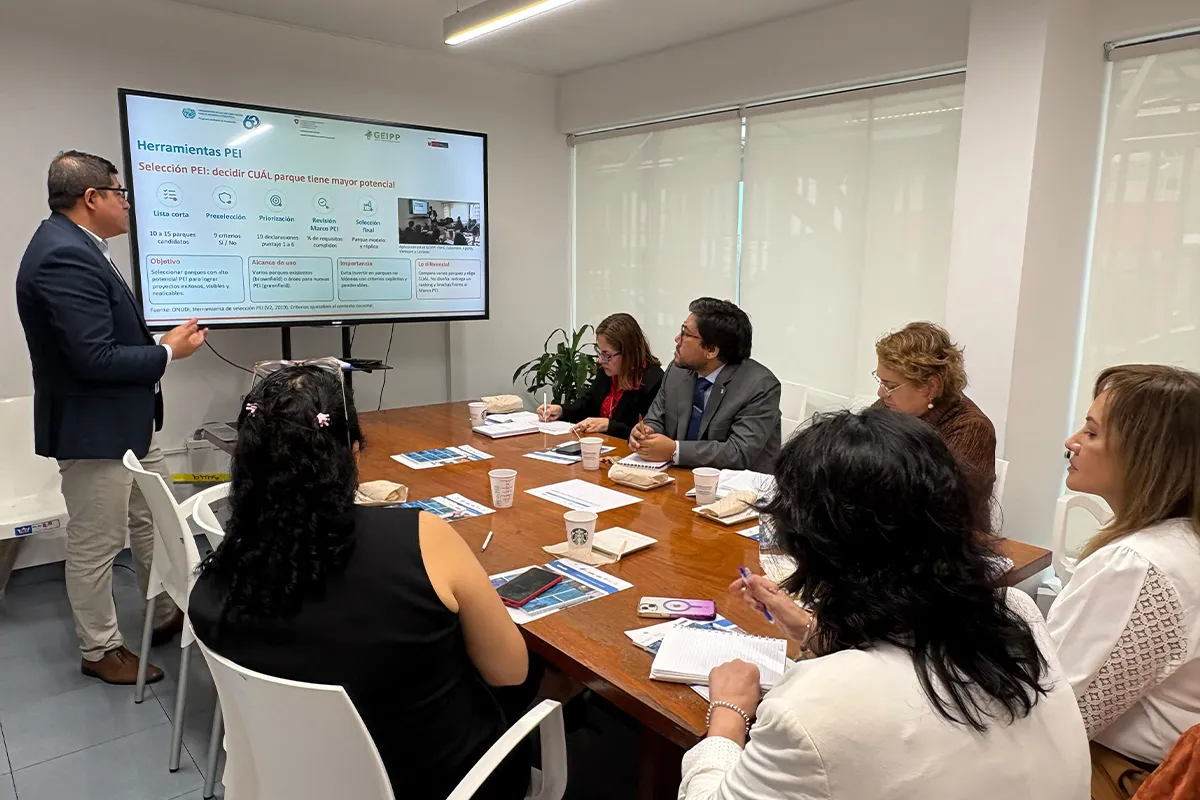
EIP Toolkit: select, plan and connect
Three tools from the EIP Toolkit, based on UNIDO’s Eco-Industrial Parks Toolbox and free to download, were also presented: EIP selection, to prioritize the parks with the greatest potential; conceptual planning, to design a park with EIP criteria; and industrial symbiosis identification, to find which waste from one company can serve another.
Sustainability by design
What is designed in a park today defines its impact for decades. With that in mind, the session addressed the circular economy and resource efficient and cleaner production (RECP) as approaches to prevent at the source rather than treat at the end.
As a national reference, the results of the EIP Peru 2025 RECP Quick Scan assessment were shared: 149 opportunities in 12 companies in 2 industrial parks, with potential annual benefits of 1,383.8 MWh of energy, 3,983.5 m³ of water, 797.6 t of waste, 459 tCO₂ avoided and USD 128,873 in savings.
A practical case to apply what was learned
Finally, the team worked on a fictitious case, the “Nuevo Horizonte Industrial Park”, to identify gaps in water, electricity, land and management, and define a course of action within PNDP’s remit.
This training is made possible by UNIDO with the support of the Embassy of Switzerland in Peru, through its Economic Cooperation (SECO), and the Ministry of Production (PRODUCE) as focal point.