
News
UNIDO and MINAM: meeting to explore joint work
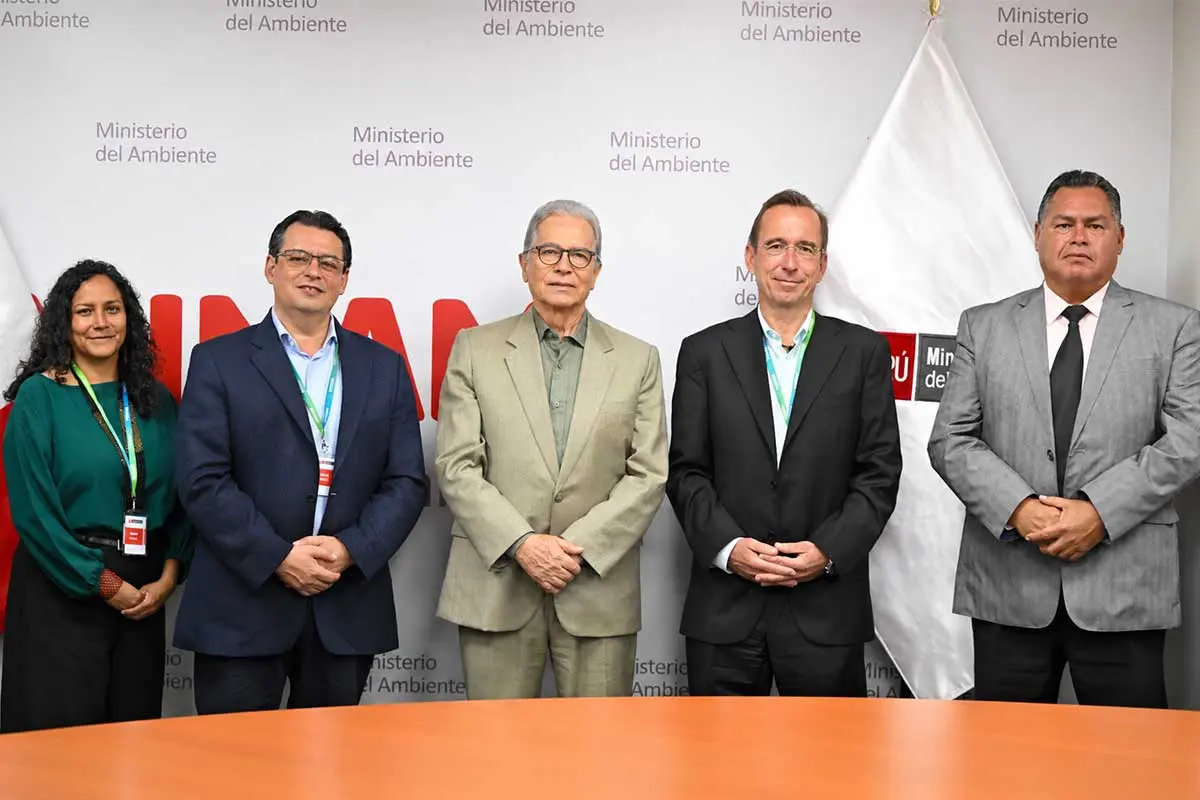
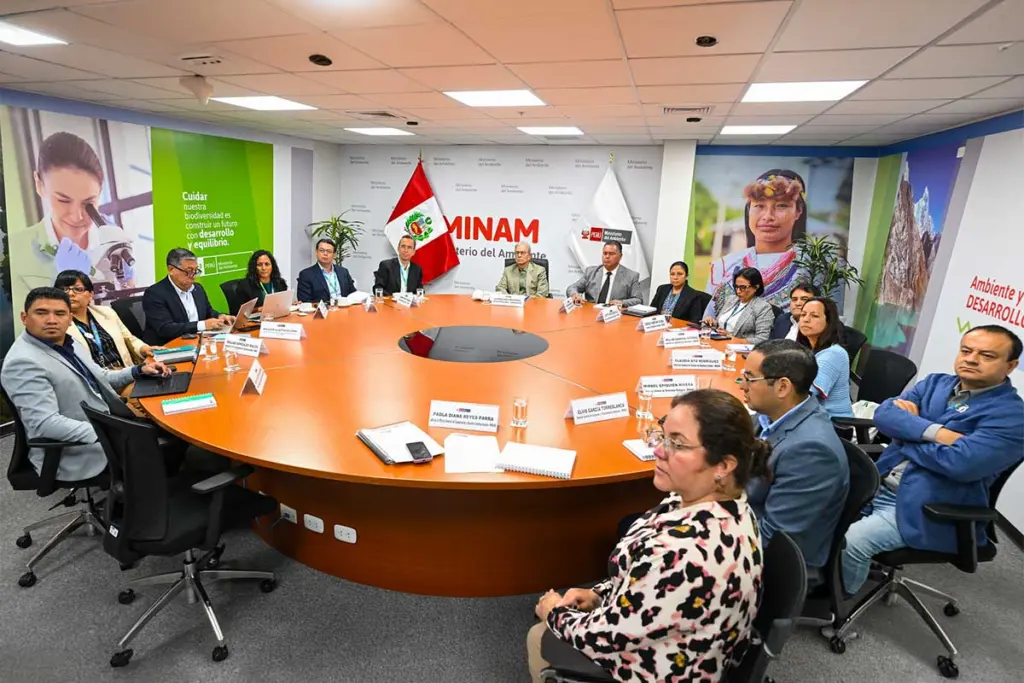
At a working meeting led by the Minister of the Environment, Vladimiro Huaroc Portocarrero, UNIDO and the Ministry of the Environment (MINAM) reviewed the results of the SIZ Peru Project and discussed how to keep working together for a more sustainable industry.
On 23 November, UNIDO and MINAM held a working meeting at the offices of the Ministry of the Environment to explore ways of working together for sustainable industrial development in Peru. During the meeting, they reviewed the results of the Sustainable Industrial Zones Project (SIZ Peru) and presented the Global Eco-Industrial Parks Programme (EIP Peru), including progress on the nature-based solutions being promoted in Paita.
MINAM, the Ministry of Production (PRODUCE) and UNIDO have eight years of joint work on this agenda, a relationship that now seeks new ways to bring its results to more companies and regions.
Who took part
On behalf of MINAM, the participants were:
- Vladimiro Huaroc Portocarrero, Minister of the Environment.
- Raquel Soto Torres, Vice Minister of Environmental Management.
- The Office of the Chief of Advisors.
- Claudia Ato, Director General of the DGGRS.
- Mirbel Epiquién, Director General of the DGDB.
- Elvis García, Director General of the DGEFA.
- David Lock, Acting Director General of the DGCCD.
- César Santisteban, Director General of the DGOTGIRN.
- Dallas Gonzáles, Acting Director of Pollution and Chemical Substances Control.
- Paola Reyes, Head of the General Office of Cooperation and International Affairs.
On behalf of UNIDO, the participants were Carmen Julia García, National Coordinator of the Global Eco-Industrial Parks Programme in Peru; Cesar Barahona, Senior Lead Specialist; and Christian Susan, Industrial Development Officer.
Results of the SIZ Peru Project
The SIZ Peru Project was implemented between 2018 and 2025 with funding from the Global Environment Facility (GEF). PRODUCE was the executing agency, UNIDO the implementing agency, and MINAM took part as the GEF focal point and a member of its Steering Committee. Its independently verified results include:
- 8,283 tonnes of CO₂ per year
- USD 4.2 million of private investment mobilised.
- 21 companies that adopted clean and low-carbon technologies.
- 211 consultants
In addition, the project left a pioneering regulatory framework: the definition of Sustainable Industrial Zone was incorporated in 2024 into the Environmental Management Regulation for the Manufacturing Industry (Supreme Decree 012-2024-PRODUCE). It also promoted guidelines for the modernisation of industrial zones and circular economy guides for the foundry industry.
EIP Peru and nature-based solutions in Paita
The meeting also presented the Global Eco-Industrial Parks Programme in Peru, which UNIDO implements in partnership with PRODUCE and with the support of the Embassy of Switzerland in Peru, through its Economic Cooperation.
In particular, they shared the results of the nature-based solutions that the programme is promoting in Paita, in the Piura region, where it works with the Paita Special Development Zone (ZED PAITA) to optimise the management of its treatment lagoons. These solutions harness natural processes to improve water management in industrial areas and connect the productive and environmental agendas.
UNIDO and MINAM: meeting to explore joint work
UNIDO and MINAM: towards new forms of collaboration
Building on these experiences, UNIDO and MINAM discussed how to give continuity to what has been achieved and broaden the sustainable industrial zones approach to topics of common interest such as the circular economy, solid waste management and biodiversity conservation.
This meeting between UNIDO and MINAM confirms what experience over these years has shown: collaboration between the environmental and productive sectors, with the support of international cooperation, enables companies to reduce their impacts while becoming more efficient and competitive.
EIP Peru is implemented by UNIDO with the support of the Embassy of Switzerland in Peru, through its Economic Cooperation, and the Ministry of Production (PRODUCE) as focal point.